DR Congo Copper: Kamoa-Kakula, the Copperbelt & Africa's Mining Future
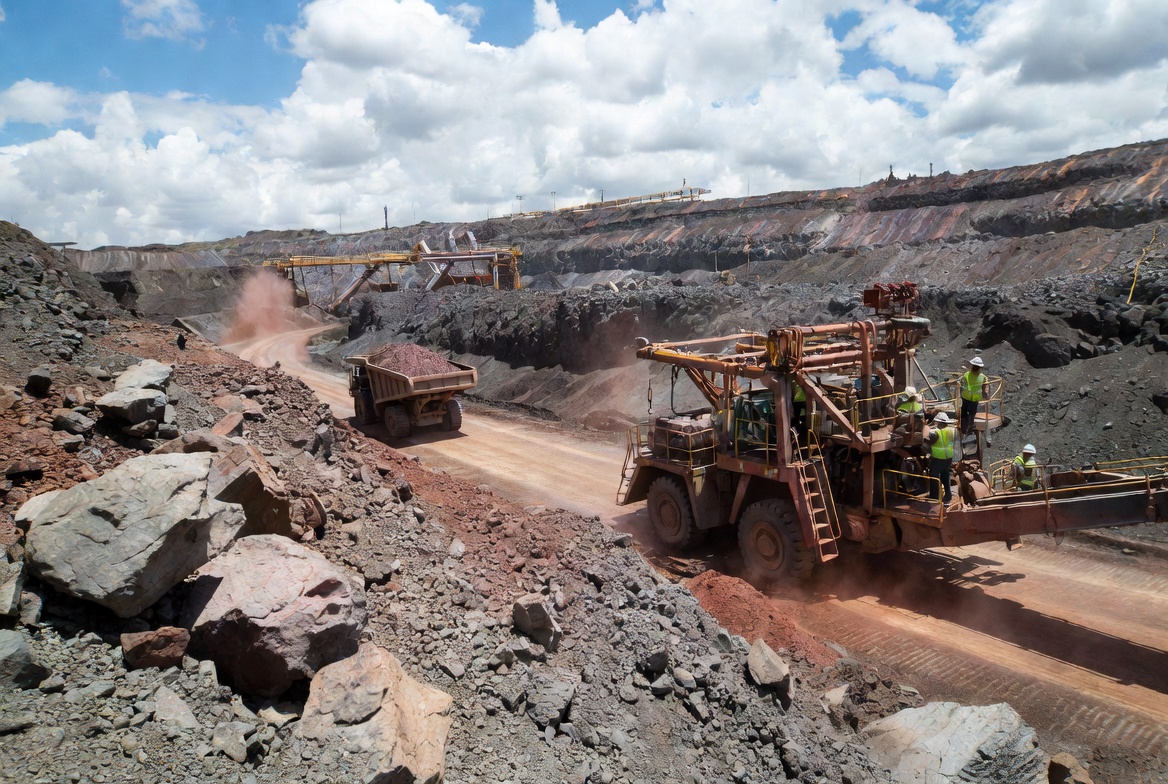
DR Congo Copper: Kamoa-Kakula, the Copperbelt & Africa’s Mining Future
The World’s Next Copper Province?
While Chile and Peru have dominated copper production for decades, a geological wonder in Central Africa is rapidly rewriting the global supply map. The Democratic Republic of Congo (DRC)—often dismissed as too risky, too corrupt, too unstable—has quietly become the world’s fastest-growing copper jurisdiction, with production climbing from under 500,000 tonnes in 2010 to over 2.5 million tonnes in 2024.
At the center of this transformation sits Kamoa-Kakula, arguably the most significant copper discovery of the 21st century. With grades that make geologists weep with joy and expansion plans that could see it produce more copper than most countries, this Ivanhoe Mines project represents everything that makes DRC investing both exhilarating and terrifying.
For investors willing to stomach frontier market risk, the DRC offers something increasingly rare in the mining world: world-class deposits that haven’t been fully exploited yet. This is the story of the Central African Copperbelt, its crown jewel, and why this forgotten corner of Africa might just determine whether the world has enough copper for the energy transition.
The Central African Copperbelt: Geology’s Gift to Africa
Geography: A Cross-Border Treasure Trove
The Central African Copperbelt stretches approximately 500 kilometers across the border regions of southern DRC and northern Zambia, forming one of the most mineralized corridors on Earth. This is not merely a mining district—it is a geological province that contains over 10% of the world’s known copper reserves and a staggering 70% of global cobalt resources.
| Key Metrics | DRC | Zambia | Total Copperbelt |
|---|---|---|---|
| Copper Reserves (Mt) | ~100+ | ~20 | ~120+ |
| Cobalt Reserves (Mt) | ~7+ | 0.3 | ~7.3+ |
| Annual Copper Production (2024) | ~2.5M tonnes | ~750K tonnes | ~3.25M tonnes |
| Mining History | ~100+ years | ~100+ years | Century of production |
The DRC side—specifically the former Katanga Province—hosts the lion’s share of high-grade deposits. What makes this region unique is the stratiform copper-cobalt mineralization hosted in sedimentary rocks of the Katanga Supergroup, deposited roughly 880 million years ago and subsequently folded and thrusted during the Pan-African Orogeny.
History: Over a Century of Extraction
Copper mining in the DRC dates back to the colonial era, with commercial operations beginning in the early 1900s under Belgian rule. The Union Minière du Haut-Katanga (UMHK) dominated production for decades, extracting high-grade ore that in some cases exceeded 10% copper—grades that seem almost mythical by today’s standards.
Post-independence in 1960 brought nationalization under Mobutu Sese Seko, followed by decades of underinvestment, mismanagement, and the gradual decline of state-owned Gécamines. By the 1990s, production had collapsed to negligible levels. The 2000s brought a new wave of investment—initially focused on cobalt-rich oxide ores—but it wasn’t until the 2010s that the Copperbelt’s true copper potential began to be understood again.
Geology: Why So Much Copper Here?
The Copperbelt’s endowment stems from a perfect geological storm:
- Source rocks: Basement terranes rich in copper and cobalt
- Sedimentary basins: The Katanga Supergroup provided ideal trap sites
- Redox boundaries: interfaces where oxygenated surface waters met reducing deeper fluids, precipitating metals
- Structural control: Folding and faulting created traps and conduits for mineralizing fluids
- Preservation: Unlike many ancient basins, the Copperbelt rocks were not deeply eroded
The result? Multiple world-class deposits where copper grades routinely exceed 3%, with pockets of bonanza-grade ore above 10%—comparable to the legendary Calumet & Hecla mines of Michigan’s Upper Peninsula in their heyday.
Comparative grade analysis highlights the Copperbelt’s extraordinary endowment:
| Deposit Type | Typical Grade (% Cu) | Examples |
|---|---|---|
| Porphyry copper (Chile) | 0.5-0.8% | Escondida, Chuquicamata |
| Iron oxide copper-gold | 0.5-1.5% | Olympic Dam, Candelaria |
| Sediment-hosted stratiform | 2.0-5.0% | Kamoa-Kakula, Tenke |
| Volcanogenic massive sulfide | 1.0-3.0% | Kidd Creek, Noranda |
| Copperbelt bonanza zones | 8.0-15%+ | Historic UMHK mines |
This grade advantage compounds over time. A mine processing 5% copper ore requires only one-fifth the throughput of a 1% mine to produce equivalent metal. This means smaller processing plants, lower energy consumption, reduced environmental footprint, and dramatically lower capital intensity per pound of copper produced.
Kamoa-Kakula: The New Crown Jewel
Discovery Story: Robert Friedland’s Billion-Dollar Hunch
Every great discovery has an origin story, and Kamoa-Kakula’s reads like a mining legend. In the late 1990s, Robert Friedland, the maverick billionaire behind Voisey’s Bay and Oyu Tolgoi, became convinced that the western extensions of the Copperbelt—largely ignored by major miners—held world-class potential.
His company, Ivanhoe Mines, acquired the Kamoa license in 2008 for a fraction of its eventual value. The initial drilling in 2008-2009 revealed a copper system of staggering proportions. By 2016, the Kakula discovery 10 kilometers west proved the system was even larger than imagined. The combined Kamoa-Kakula complex now represents one of the largest copper developments globally.
Phase 1 & 2: Production Reality
Kamoa-Kakula achieved commercial production in July 2021 with Phase 1, initially targeting 200,000 tonnes of copper annually. Phase 2 ramped up production capacity to 450,000 tonnes per year by early 2023. As of late 2024, the operation is running above nameplate capacity, routinely exceeding expectations.
| Production Phase | Capacity | Status | Key Characteristics |
|---|---|---|---|
| Phase 1 | 200 ktpa Cu | Operational since 2021 | 5.1% Cu grade, underground |
| Phase 2 | 400 ktpa Cu | Operational since 2023 | Parallel processing trains |
| Phase 3 | 580 ktpa Cu | Under construction | Smelter + expansion |
| Phase 4 | 600+ ktpa Cu | Feasibility stage | Ultimate production target |
Grades: The World’s Highest
What truly distinguishes Kamoa-Kakula is grade. While global copper mines average 0.6-0.7% copper, Kamoa-Kakula’s reserve grade exceeds 5.5% copper—among the highest of any major copper mine worldwide. For context:
- Escondida (Chile): ~0.6% Cu
- Grasberg (Indonesia): ~1.0% Cu
- Morenci (USA): ~0.3% Cu
- Kamoa-Kakula: 5.5%+ Cu
This grade advantage translates directly into economics. The mine’s C1 cash costs are estimated at under $1.00 per pound—placing it in the bottom quartile of the global cost curve. At $4.00/lb copper prices, Kamoa-Kakula generates margins that most miners can only dream of.
Expansion Plans: The Path to 600,000 Tonnes
Ivanhoe’s development roadmap is aggressive but achievable:
- Phase 3 (2025): Adds a 500,000-tonne-per-annum copper smelter and expands mining to 580 ktpa
- Phase 4 (2027-2028): Ultimate production target of 600,000+ tonnes annually
At full build-out, Kamoa-Kakula alone would rank among the world’s top five copper mines, producing more metal than entire countries like Australia or Canada.
DRC’s Copper Landscape: Beyond Kamoa-Kakula
While Kamoa-Kakula grabs headlines, the broader DRC copper story deserves attention:
Tenke Fungurume: The Chinese Acquisition
Tenke Fungurume (TFM) was Freeport-McMoRan’s crown jewel African asset until 2016, when China Molybdenum (CMOC) acquired it for $2.65 billion. Today, TFM produces approximately 400,000 tonnes of copper annually, making it one of Africa’s largest copper operations.
CMOC has invested heavily in expansion, with recent upgrades pushing capacity toward 500,000+ tonnes. However, the project has faced disputes with the DRC government over royalty calculations and contract terms—a recurring theme in Congolese mining.
Kisanfu: Cobalt Meets Copper
Also owned by CMOC, Kisanfu represents one of the world’s largest undeveloped copper-cobalt deposits. With resources exceeding 3.1 million tonnes of copper and 3.1 million tonnes of cobalt, this project could eventually rival Tenke in scale. Development has been slower than expected due to cobalt price volatility and infrastructure constraints.
Sicomines: The Infrastructure-for-Resources Deal
The Sino-Congolese agreement (Sicomines) represents a unique model: Chinese state banks provide infrastructure loans secured against copper and cobalt production. This $6+ billion deal has built roads, hospitals, and schools while developing the Dikulushi and other deposits.
Critics argue the terms heavily favor China; proponents note that something is better than nothing in a country with massive infrastructure gaps. Regardless, Sicomines production contributes meaningfully to DRC copper supply.
Artisanal Mining: The Shadow Economy
No discussion of DRC copper is complete without addressing artisanal mining, which supplies an estimated 15-20% of DRC copper exports and the vast majority of cobalt. Hundreds of thousands of informal miners dig by hand in dangerous conditions, selling to traders who feed into global supply chains.
The artisanal sector is plagued by:
- Child labor (estimated 35,000+ children in cobalt mining)
- Fatal accidents and tunnel collapses
- Conflict mineral linkages in eastern regions
- Corruption and exploitation by traders (“négociants”)
- Mercury and other toxic chemical exposure
Estimates suggest artisanal miners produce copper containing material at grades as low as 1-2%, using primitive hand tools and dangerous digging techniques. Tunnel collapses kill dozens annually, though accurate statistics are elusive given the informal nature of operations. The cobalt connection amplifies scrutiny, as cobalt’s use in EV batteries creates direct links between artisanal conditions and major Western corporations.
Major producers like Ivanhoe and CMOC maintain strict demarcation between industrial and artisanal zones, but the proximity creates ongoing ESG challenges for DRC copper as a whole. The Fair Cobalt Alliance and other initiatives attempt to formalize and improve conditions, but progress is slow. For investors, artisanal mining represents both reputational risk and potential opportunity—if formalization succeeds, artisanal production could supplement industrial output with proper oversight.
The Infrastructure Challenge: Moving Metal in Central Africa
Power: The Inga Dam vs. Diesel Reality
The DRC’s power infrastructure is both a blessing and a curse. The country possesses massive hydroelectric potential—the Inga dams on the Congo River could theoretically power half of Africa. The existing Inga I and Inga II facilities have combined capacity of nearly 1,800 MW, while the proposed Grand Inga project—at 40+ GW—would be the world’s largest hydroelectric installation, capable of powering much of the continent.
In practice, Katanga Province operates on a patchwork of aging infrastructure and expensive diesel generation. The provincial grid, SNEL, struggles with reliability and capacity. Mines have responded through various strategies:
| Power Strategy | Cost ($/MWh) | Advantages | Disadvantages |
|---|---|---|---|
| Grid Power (SNEL) | $40-60 | Low cost | Unreliable, limited capacity |
| Imported (Zambia) | $60-80 | Reliable | Transmission constraints |
| Diesel Generation | $180-250 | Portable, reliable | High cost, emissions |
| Hydro (dedicated) | $30-50 | Clean, cheap | Capital intensive |
Kamoa-Kakula has secured renewable hydroelectric power from the Mwadingusha and upgrade projects, but most operations rely on imported fuel or imported electricity from Zambia. The long-term solution—Grand Inga, a proposed 40+ GW hydro complex—remains a dream deferred by decades of political dysfunction and financing challenges. Western development finance institutions have shown renewed interest, but concrete progress remains elusive.
Export Routes: The Logistics Nightmare
The DRC is landlocked, and getting copper to market requires navigating some of Africa’s most challenging logistics corridors. Unlike Chile or Peru, where ports sit adjacent to mining districts, DRC copper must traverse thousands of kilometers of often-deteriorated roads and railways to reach ocean ports. This logistical burden adds roughly $200-400 per tonne to production costs—a significant but manageable penalty given the extraordinary grades being mined.
The transport challenge has shaped DRC mining economics for decades. During the colonial era, purpose-built railways connected Katanga to Angolan and South African ports. After decades of conflict and neglect, much of this infrastructure crumbled, forcing miners to rely on road transport through Zambia. Recent rehabilitation efforts are finally changing this calculus, but infrastructure remains a binding constraint on growth.
| Route | Distance | Status | Challenges |
|---|---|---|---|
| Lubumbashi → Durban (via Zambia) | ~2,500 km | Primary route | Congested, border delays |
| Lubumbashi → Dar es Salaam | ~1,800 km | Secondary | Poor road conditions |
| Lobito Corridor (Angola) | ~1,200 km | Under development | New rail investment |
| Benguela Railway | ~1,300 km | Rehabilitated | To Lobito port |
The Lobito Corridor—recently upgraded with international investment—offers the most promising alternative, potentially cutting transport costs significantly. However, most copper still moves through Durban, South Africa, subject to that port’s notorious congestion.
Rail: Cape to Cairo Dreams
The fantasy of a trans-African rail network persists, but reality is more modest. The Benguela Railway, rehabilitated with Chinese investment, now connects the Copperbelt to Angola’s Lobito port—a game-changer that could reduce export costs by 30%+ for mines able to access it.
Political & Security Risks: The Price of Frontier Returns
From Kabila to Tshisekedi: Evolution or More of the Same?
The DRC’s political landscape has shifted since Félix Tshisekedi succeeded Joseph Kabila in 2019—DRC’s first peaceful transfer of power. Tshisekedi has been more mining-friendly than feared, though his government has proven no less aggressive in renegotiating contracts.
Key concerns remain:
- Central government weakness
- Corruption (DRC ranks 166th of 180 on Transparency International’s index)
- Bureaucratic paralysis
- Regional conflict spillover
The 2018 Mining Code: Resource Nationalism Arrives
The revised Mining Code of 2018 represented a sea change:
- Royalties increased from 2% to 3.5% (base metals), 10% (strategic substances)
- State free carried interest increased to 10% (up from 5%)
- Profits tax raised from 30% to 35%
- Removal of 10-year stability guarantees
Major operators pushed back hard, but the government held firm. The result: higher government take, but continued investment because the geology is simply too good to ignore.
Eastern Congo: The Conflict Shadow
While most copper mines operate in relatively stable southern Katanga, the ongoing conflict in North Kivu and Ituri casts a long shadow. The M23 rebellion—allegedly backed by Rwanda—foreign armed groups including ADF and CODECO, and persistent humanitarian crises create reputational risks for all DRC investment, even when operations are geographically distant.
The distance between eastern conflict zones and Katanga mining districts (roughly 1,500 kilometers) provides physical separation, but the reputational contagion is real. Media coverage rarely distinguishes between copper-producing Katanga and gold/tin-producing Kivu regions. This creates due diligence challenges for Western investors and consumers concerned about conflict mineral linkages.
Moreover, instability in the east diverts government attention and military resources that might otherwise support mining sector development. The United Nations maintains its largest peacekeeping operation in eastern DRC—a sobering reminder of governance challenges that extend beyond mining codes and tax rates.
The Cobalt Connection: EV Demand Meets DRC Reality
The DRC produces approximately 70% of the world’s cobalt, a by-product of copper mining that has become strategically vital for electric vehicle batteries. This creates a fascinating dynamic:
Cobalt-Copper Geology
Cobalt occurs alongside copper in the Copperbelt’s stratiform deposits. When mining companies target copper, they inevitably produce cobalt—creating a revenue stream that can significantly improve project economics.
| Cobalt Production | 2023 Estimate | % of Global Supply |
|---|---|---|
| DRC | ~170,000 tonnes | ~70% |
| Russia | ~8,000 tonnes | ~3% |
| Australia | ~5,000 tonnes | ~2% |
| Others | ~60,000 tonnes | ~25% |
ESG Dilemma
The cobalt connection creates an ESG paradox for Western automakers: they need DRC cobalt for affordable EVs, but sourcing from a region associated with child labor and conflict creates serious reputational risk. This has driven initiatives like the Fair Cobalt Alliance and blockchain traceability schemes, though implementation remains spotty.
Ivanhoe Mines Investment Case: Betting on Friedland
Stock Analysis: IVN.TO on the TSX
Ivanhoe Mines (TSX: IVN) offers pure-play exposure to Kamoa-Kakula’s world-class asset. As of early 2026, the company trades with a market capitalization reflecting both production cash flows and expansion optionality.
| Metric | Ivanhoe Mines |
|---|---|
| Primary Listing | TSX: IVN |
| Market Cap (est.) | ~CAD $15-20B range |
| Kamoa-Kakula Ownership | ~40% (with Zijin Mining) |
| Net Cash Position | Positive |
| 2024 Copper Production (share) | ~180,000 tonnes |
Robert Friedland’s Track Record
Love him or hate him, Friedland delivers discoveries. His career includes:
- Galactic Resources: Bre-X adjacent (controversial but profitable exit)
- Diamond Fields: Voisey’s Bay nickel discovery → $4.3B Inco acquisition
- Ivanhoe Mines (Mongolia): Oyu Tolgoi copper-gold → Rio Tinto partnership
- Ivanhoe Mines (DRC): Kamoa-Kakula → Current flagship
His ability to identify overlooked frontier opportunities and secure strategic partnerships (notably with China’s Zijin Mining at Kamoa-Kakula) is unmatched in the industry.
Risks Specific to Ivanhoe
- DRC jurisdiction risk: Entire value chain exposed to one country
- Single asset concentration: Kamoa-Kakula is the company
- Share structure: Friedland maintains significant control
- Construction/execution risk: Phase 3 and 4 remain to be delivered
Other Players in DRC: The Competitive Landscape
Glencore: The Incumbent
Glencore operates the Mutanda and Kamoto copper-cobalt mines, producing over 250,000 tonnes of copper annually. After temporarily suspending Mutanda due to low cobalt prices, Glencore has restarted operations as EV demand surged. Their integrated trading arm provides competitive advantages in marketing DRC production.
China Molybdenum: The Chinese Champion
CMOC has emerged as the dominant Chinese player, controlling Tenke Fungurume and Kisanfu. Their appetite for expansion and state-backed financing makes them formidable competitors for future acquisitions.
ERG: The Kazakh Connection
Eurasian Resources Group (ERG) operates Frontier and Boss Mining in the DRC, contributing meaningful copper-cobalt production. Their ties to Kazakhstan provide alternative financing outside Western capital markets.
Investment Thesis: High Risk, High Reward
The Bull Case: 20% of Global Supply by 2030
The DRC is uniquely positioned to capture a growing share of global copper production:
- Geology: World-class deposits with grades multiples above global average
- Untapped resources: Massive exploration upside remains
- Infrastructure improving: Lobito Corridor, power upgrades
- Investment flowing: $15+ billion committed to new projects
- EV demand: Cobalt-copper link creates strategic importance
Analysts project DRC copper production could reach 3-4 million tonnes by 2030, representing 15-20% of global supply—up from under 5% a decade ago.
ESG Concerns: The Uncomfortable Truth
Investors must confront uncomfortable realities:
- Child labor: Documented in artisanal cobalt mining
- Conflict minerals: Eastern Congo instability creates chain-of-custody challenges
- Corruption: Government opacity and graft risks
- Environmental: Limited environmental oversight, legacy pollution
Solutions exist—certification schemes, industrial formalization, traceability technology—but implementation is incomplete. The DRC remains an ESG minefield that rules out investment for many institutional mandates.
Opportunity for Patient Capital
For investors with:
- High risk tolerance
- Long investment horizons (5-10+ years)
- ESG flexibility or active engagement strategies
- Frontier market expertise
The DRC offers asymmetric return potential. The geology is real, the production is growing, and the world desperately needs more copper. In a supply-constrained market, the DRC’s high-grade, low-cost production will find buyers regardless of political imperfections.
Historical precedent supports this thesis. Investors who entered Chilean copper in the 1970s—despite Allende’s nationalization threats—were rewarded as the industry stabilized and grew. Those who bought Indonesian mining assets during the 1997 Asian financial crisis captured generational returns. Frontier market investing requires stomach, but the payoff can be extraordinary.
The DRC’s trajectory appears more positive than commonly perceived. Under President Tshisekedi, mining contract renegotiations have been contentious but ultimately successful—companies have accepted higher government takes while maintaining operations. This suggests a maturing relationship between state and industry, where both sides recognize mutual dependence. The government needs mining revenue; miners need ore bodies that only the DRC can provide.
Conclusion
The Democratic Republic of Congo represents mining’s ultimate paradox: a jurisdiction that combines the world’s best geology with some of its worst governance. Kamoa-Kakula proves that exceptional deposits can overcome exceptional challenges—the project has delivered on its promises despite DRC’s well-documented risks.
For the energy transition to succeed, the world needs the DRC’s copper. Full stop. No other jurisdiction can replace 600,000 tonnes of annual production at under $1/lb costs. No other country holds 70% of cobalt supply. The question is not whether DRC copper matters—it absolutely does—but whether investors can navigate the risks to capture the rewards.
Robert Friedland bet billions that the answer is yes. So far, that bet is paying off handsomely. As Kamoa-Kakula phases roll out and production climbs toward that magical 600,000-tonne target, the DRC’s transformation from failed state to copper superpower will become impossible to ignore.
Looking ahead, the DRC’s copper sector faces both tremendous opportunity and persistent challenges. The opportunity lies in undeveloped resources—deposits like Kisanfu, unexplored extensions of known systems, and the potential for new discoveries in underexplored portions of the Copperbelt. Chinese investment continues to flow, Western majors are cautiously returning, and the Lobito Corridor promises to reduce export costs significantly.
The challenges—corruption, infrastructure deficits, ESG concerns, and political instability—are not going away. But they are manageable for sophisticated investors with realistic expectations. The DRC will never be Canada or Australia in terms of regulatory certainty. It doesn’t need to be. It only needs to be predictable enough that miners can underwrite risk and earn returns commensurate with that risk.
For frontier market investors, the message is clear: the world’s next copper province isn’t in the Andes or Arizona. It’s in Central Africa, and the window for early entry is closing. The majors are watching. The Chinese are building. The world needs the metal. The only question is who will capture the value this extraordinary geology creates.
Disclaimer: This article is for informational purposes only and does not constitute investment advice. Mining investments carry significant risks, including total loss of capital. Conduct thorough due diligence before investing.
Related Articles: