Copper Supply Crisis: The Looming 2025-2030 Shortage
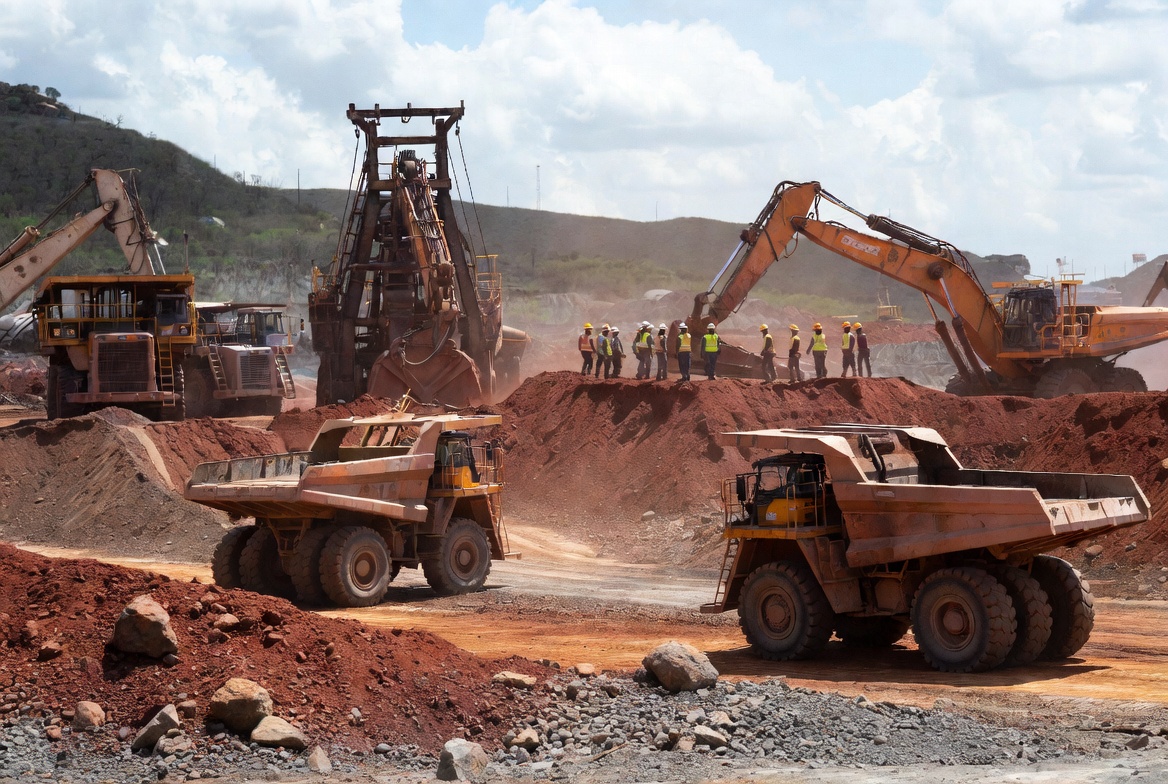
Copper Supply Crisis: The Looming 2025-2030 Shortage
A perfect storm is brewing in the copper market. What began as whispers among mining executives in 2023 has evolved into thunderous warnings from the world’s most respected commodity research firms. S&P Global, Wood Mackenzie, and CRU Group are all sounding the alarm: we are walking blindly into the most severe copper supply crisis in modern history.
The numbers are staggering. By 2035, the industry could face a deficit of 9.9 million tonnes annually—equivalent to losing the entire production of Chile, the world’s largest copper producer, twice over. This isn’t a temporary disruption or a market cycle. This is a structural crisis decades in the making.
For investors, the implications are profound. Copper is the backbone of electrification, renewable energy, and artificial intelligence infrastructure. As supply constraints tighten their grip, the companies that control existing reserves will command unprecedented premiums. The window for strategic positioning is narrowing rapidly.
The Supply-Demand Math: A Widening Chasm
Understanding the copper crisis requires confronting some uncomfortable arithmetic. The global copper market operates on a knife’s edge, with supply and demand traditionally balanced within 1-2% margins. That equilibrium is about to shatter.
Current Market Position (2024-2025)
| Metric | 2024 Actual | 2025 Estimate | Variance |
|---|---|---|---|
| Global Mine Supply | 22.3M tonnes | 22.8M tonnes | +2.2% |
| Global Refined Demand | 26.1M tonnes | 27.4M tonnes | +5.0% |
| Market Balance | -3.8M tonnes | -4.6M tonnes | Widening |
| LME Average Price | $8,850/t | $9,400/t | +6.2% |
| Exchange Inventory (Days) | 4.2 days | 3.1 days | -26% |
Data sources: ICSG, Wood Mackenzie, Bloomberg
The 2024-2025 period has already demonstrated the market’s fragility. Exchange inventories have plummeted to critically low levels—just over 3 days of global consumption coverage. In commodity markets, such thin inventory buffers historically precede violent price spikes.
The Projected Gap: 2026-2030
| Year | Supply (M tonnes) | Demand (M tonnes) | Deficit | % Gap |
|---|---|---|---|---|
| 2026 | 23.5 | 29.2 | -5.7 | -19.5% |
| 2027 | 24.1 | 31.8 | -7.7 | -24.2% |
| 2028 | 24.8 | 34.5 | -9.7 | -28.1% |
| 2029 | 25.4 | 37.1 | -11.7 | -31.5% |
| 2030 | 26.0 | 39.8 | -13.8 | -34.7% |
Forecasts: S&P Global Commodity Insights, CRU Group
By 2030, the deficit could exceed 13.8 million tonnes annually. To put this in perspective, that represents approximately 60% of current global mine supply. No amount of price elasticity can bridge a gap of this magnitude in the short term.
The S&P Global Warning: 9.9 Million Tonnes by 2035
In their landmark study “The Future of Copper,” S&P Global presented what industry insiders now call “the scenario that keeps CEOs awake at night.” Their base case analysis suggests that even under optimistic supply growth assumptions, the market faces:
- 9.9 million tonne annual deficit by 2035
- Cumulative shortfall of 54 million tonnes between 2025-2035
- Supply growth of only 1.4% annually through 2035
- Demand growth of 3.5% annually through 2035
The report’s authors were explicit: “The world is on track to face a significant shortfall in copper supply needed for the energy transition.” These aren’t speculative projections—they reflect geological, economic, and political realities that cannot be wished away.
Why Supply Can’t Keep Up: Five Structural Barriers
The copper supply crisis isn’t the result of a single failure but rather a convergence of structural headwinds that have accumulated over decades. Each barrier reinforces the others, creating a supply response mechanism that is fundamentally broken.
1. Grade Decline: Mining Ever-Poorer Rock
The copper industry has consumed its best deposits first—a rational economic choice that has left increasingly marginal ore for future generations.
| Decade | Average Global Copper Grade | Rock Required per Tonne Cu |
|---|---|---|
| 1990s | 1.2% | 83 tonnes |
| 2000s | 0.9% | 111 tonnes |
| 2010s | 0.7% | 143 tonnes |
| 2020s | 0.5% | 200 tonnes |
| 2030 (projected) | 0.4% | 250 tonnes |
Source: Cox & Singer, USGS, company reports
The implications extend far beyond simple extraction costs. Processing 250 tonnes of rock versus 83 tonnes requires:
- 3x more energy consumption
- 3x more water usage
- 3x more waste generation
- Significantly larger tailings storage facilities
Chile’s Codelco, the world’s largest copper producer, exemplifies this challenge. Their average ore grade has collapsed from 1.04% in 2005 to 0.62% in 2024. The company now processes 68% more material to produce the same amount of copper—a transformation that has devastated their cost structure and production reliability.
2. The Discovery Drought: No Major Finds in Two Decades
The mining industry hasn’t discovered a truly world-class copper deposit in over 20 years. The last deposits capable of producing 500,000+ tonnes annually were found in the late 1990s and early 2000s.
| Deposit | Discovery Year | Peak Production Potential | Status |
|---|---|---|---|
| Escondida (Chile) | 1981 | 1.5M tonnes/year | Mature, declining |
| Grasberg (Indonesia) | 1988 | 750K tonnes/year | Transitioning underground |
| Oyu Tolgoi (Mongolia) | 2001 | 500K tonnes/year | In production (delayed) |
| Kamoa-Kakula (DRC) | 2008 | 450K tonnes/year | In production |
| No major discoveries since 2010 | — | — | — |
Sources: Company annual reports, S&P Global Market Intelligence
Exploration budgets increased during the 2010-2014 commodity boom but yielded diminishing returns. Geologists have mapped most prospective terrain, and the remaining frontier regions (DRC, Amazon basin, Siberia) present extreme political, environmental, or logistical challenges.
3. Permitting Paralysis: The Decade-Long Wait
Even when deposits are discovered, bringing them to production has become an exercise in institutional patience. The timeline from discovery to first production has stretched to unprecedented lengths:
| Stage | Historical Timeline (1990s) | Current Timeline (2020s) |
|---|---|---|
| Discovery to Feasibility | 3-5 years | 5-8 years |
| Feasibility to Permitting | 2-3 years | 5-10 years |
| Permitting to Construction | 1-2 years | 3-5 years |
| Construction to Production | 3-4 years | 4-6 years |
| Total | 9-14 years | 17-29 years |
The permitting bottleneck has become the industry’s most cited constraint. In jurisdictions with rigorous environmental standards—including the United States, Canada, Australia, and increasingly Latin America—opposition from local communities, environmental groups, and indigenous populations can delay projects indefinitely.
Rio Tinto’s Resolution Copper project in Arizona, discovered in 1995, remains mired in regulatory limbo nearly three decades later. Northern Dynasty’s Pebble deposit in Alaska, one of North America’s largest undeveloped copper resources, has been blocked by EPA veto despite $800 million in exploration investment.
4. Resource Nationalism: Governments Grabbing the Reins
Copper-producing nations have awakened to the strategic value of their resources. From Chile to Zambia to Indonesia, governments are rewriting the rules to capture larger shares of mining revenue.
| Country | Recent Policy Changes | Impact on Investment |
|---|---|---|
| Chile | 47% royalty on copper above $4/lb; state ownership mandates | BHP, Anglo American deferring expansions |
| Peru | Social license uncertainty; community opposition | Las Bambas operating at 60% capacity |
| DRC | 10% free carried state interest; export restrictions | IVN’s Kamoa-Kakula facing fiscal uncertainty |
| Indonesia | Export bans on concentrates; forced smelter construction | Freeport investing $3B in local processing |
| Zambia | Tax regime instability; royalty rate changes | Barrick, First Quantum reviewing expansion plans |
Sources: Government policy documents, company disclosures
Resource nationalism creates a toxic feedback loop. Higher taxes and uncertain fiscal regimes deter investment, which constrains supply growth, which drives prices higher, which triggers even more aggressive government intervention.
5. ESG Restrictions: The Green Transition’s Irony
The renewable energy transition depends on copper, yet ESG (Environmental, Social, Governance) standards are systematically blocking new copper mine development.
The world’s largest undeveloped copper deposits sit in environmentally sensitive regions:
- Alaska’s Bristol Bay watershed (Pebble deposit)
- Arizona’s Apache sacred lands (Resolution Copper)
- Peru’s Andean highlands (multiple projects)
- Ecuador’s biodiverse cloud forests (Cascabel project)
Major institutional investors and banks have adopted policies restricting financing for projects in protected areas or with significant environmental footprints. The same financial institutions funding solar and wind projects are simultaneously blocking the copper mines those projects require.
The Demand Side Acceleration: Four Demand Tsunamis
While supply struggles, demand is entering a period of explosive growth driven by four interconnected megatrends. Each would be significant in isolation; together, they are transformative.
1. Electric Vehicles: The Copper Multiplier
The transition from internal combustion engines to electric vehicles represents the single largest demand shock in copper’s history.
| Vehicle Type | Copper Content | vs. ICE Vehicle |
|---|---|---|
| Conventional ICE | 23 kg | Baseline |
| Hybrid Electric | 40 kg | 1.7x |
| Plug-in Hybrid | 60 kg | 2.6x |
| Battery Electric (BEV) | 83 kg | 3.6x |
| Electric Bus | 369 kg | 16x |
Source: ICA (International Copper Association), 2024 analysis
Global EV adoption is accelerating faster than even optimistic projections:
- 2023: 14 million EVs sold (18% market share)
- 2024: 17 million EVs sold (22% market share)
- 2030 projection: 55+ million EVs (50%+ market share)
By 2030, EVs alone could add 4.5 million tonnes of annual copper demand—equivalent to nearly 20% of current global supply.
2. Renewable Energy: Metal-Intensive Power
Renewable energy systems are fundamentally more copper-intensive than fossil fuel generation.
| Energy Source | Copper Usage (kg/MW installed) | vs. Coal Baseline |
|---|---|---|
| Coal | 1,100 kg | 1.0x |
| Natural Gas | 1,300 kg | 1.2x |
| Solar PV | 5,500 kg | 5.0x |
| Onshore Wind | 4,700 kg | 4.3x |
| Offshore Wind | 10,800 kg | 9.8x |
Source: Copper Alliance, Wood Mackenzie
The IEA’s net-zero scenario requires annual renewable capacity additions to triple by 2030. This translates to an additional 2.8 million tonnes of annual copper demand for power generation infrastructure alone.
3. Grid Modernization: The Hidden Copper Giant
Renewable energy requires grid infrastructure upgrades that most analysts underestimate. Solar and wind are geographically dispersed, requiring extensive transmission investment to connect generation to demand centers.
Key copper-intensive grid components:
- High-voltage transmission lines: 15-25 tonnes copper per kilometer
- Distribution transformers: 500-5,000 kg copper per unit
- Smart grid infrastructure: 20-40% more copper than conventional grids
- Energy storage systems: 1-3 kg copper per kWh capacity
The Brattle Group estimates the United States alone needs $100 billion in grid copper infrastructure by 2030. Global grid investment could consume 3.2 million tonnes of additional copper annually through the decade.
4. AI Data Centers: The New Demand Wildcard
Artificial intelligence infrastructure emerged as a major copper demand driver in 2023-2024—and it’s growing exponentially.
| Data Center Component | Copper Intensity |
|---|---|
| Power distribution (busbars) | 1,500-3,000 kg per MW |
| Cooling systems | 800-1,200 kg per MW |
| Server racks & interconnects | 400-600 kg per MW |
| Grounding & protection | 200-400 kg per MW |
| Total per MW capacity | 2,900-5,200 kg |
Hyperscale data centers now require 50-100 MW of power each, compared to 5-10 MW for traditional facilities. With AI compute demand projected to grow 10x by 2030, data centers could add 500,000+ tonnes of annual copper demand—demand that didn’t exist in planning models from just three years ago.
Country-by-Country Supply Risks: The Geopolitical Minefield
Copper supply concentration creates systemic vulnerabilities. Three countries—Chile, Peru, and the Democratic Republic of Congo—account for over 45% of global mine production. Each faces distinct challenges that threaten supply stability.
Chile: The Giant Stumbles
Chile produces 5.5 million tonnes annually (24% of global supply) but faces existential challenges:
Operational Decline:
- Codelco production down 15% since 2018 peak
- Chuquicamata transition to underground causing disruptions
- Escondida grade decline accelerating
Water Crisis:
- Northern Chile in 14-year mega-drought
- Mines forced to invest $8B+ in desalination infrastructure
- Energy costs for desalination eroding margins
Policy Uncertainty:
- 47% royalty on copper above $4/lb
- Constitutional reform debates threatening property rights
- Environmental protests blocking expansion projects
Analysts project Chilean production will decline through 2027 before modest recovery—a terrifying prospect for global supply security.
Peru: Social Unrest Paralyzes Output
Peru, the world’s second-largest producer (2.7M tonnes), has become a case study in the “social license” challenge:
| Mine | Status | Impact |
|---|---|---|
| Las Bambas (MMG) | Operating at 60% capacity | Blockades, community disputes |
| Cuajone (Southern Copper) | Production suspended (2022-2023) | Indigenous protests |
| Antapaccay (Glencore) | Intermittent shutdowns | Road blockades |
| Quellaveco (Anglo American) | Operating below design | Water disputes |
The pattern is clear: Peru has the geological resources but lacks the social and political stability to exploit them reliably. This structural risk isn’t resolving—it’s intensifying.
DRC: High Risk, High Reward
The Democratic Republic of Congo has emerged as copper’s most dynamic growth jurisdiction, but political risk clouds the outlook:
The Kamoa-Kakula Success Story:
- Ivanhoe Mines’ project reached 450,000 tonnes annualized production in 2024
- Phase 3 expansion targeting 600,000+ tonnes by 2026
- Among the world’s highest-grade, lowest-cost deposits
The Risk Factors:
- Fiscal regime changes introducing 10% state free-carry
- Export restriction policies forcing domestic processing
- Infrastructure constraints (power, transport)
- Political instability and corruption
- Artisanal mining encroachment
The DRC embodies copper’s fundamental dilemma: the best remaining geology exists in the riskiest jurisdictions.
Can Recycling Save Us? The Secondary Supply Reality
Recycling is often cited as copper’s supply safety net. The reality is more nuanced—and more concerning.
Current Recycling Statistics
| Metric | Value | Context |
|---|---|---|
| Global recycling rate | ~35% of consumption | Among highest of any metal |
| Scrap usage in refined production | 4.2M tonnes annually | ~17% of total supply |
| Old scrap collection rate | 65-70% | Limited by dispersed end-uses |
| Recycled copper embodied energy | 15-20% of primary production | Significant environmental benefit |
Sources: ICA, Bureau of International Recycling
The Recycling Limitations
1. Scrap Availability Lag: Copper products have long lifespans (20-50+ years for buildings, 10-15 years for vehicles). The copper installed during the 1960s-1990s construction boom isn’t yet available for recycling. The “urban mine” will grow—but not fast enough for the 2025-2030 crunch.
2. Quality Degradation: Recycled copper from electronic waste and mixed alloys often requires blending with primary copper to meet conductivity standards for electrical applications. High-purity applications (power transmission, semiconductors) require virgin metal.
3. Collection Challenges: Unlike aluminum cans or steel auto bodies, copper is embedded in buildings, buried in infrastructure, and distributed across millions of end-products. Collection and processing costs often exceed scrap value for small-diameter wire and mixed waste streams.
4. Regional Imbalances: Scrap generation is concentrated in developed economies (US, EU, Japan), while demand growth is in developing Asia (China, India, Southeast Asia). This geographic mismatch creates logistical constraints and trade policy complications.
Recycling Verdict: Secondary supply will grow, but it cannot close the 9+ million tonne deficit projected for the 2030s. Recycling buys time—it doesn’t solve the structural supply crisis.
The Price Impact Forecast: How High Can Copper Go?
If the supply-demand models are even approximately correct, copper prices must rise significantly to balance the market through demand destruction and supply incentive.
Analyst Price Predictions
| Source | 2026 Target | 2028 Target | 2030 Target | Scenario |
|---|---|---|---|---|
| Goldman Sachs | $11,500/t | $15,000/t | $15,000+ | Supply disruption |
| Citigroup | $10,500/t | $12,000/t | $14,000/t | Structural deficit |
| Trafigura | $12,000/t | $15,000/t | $15,000+ | Investment supercycle |
| Wood Mackenzie | $9,500/t | $11,000/t | $13,000/t | Base case |
| CRU Group | $10,000/t | $12,500/t | $14,500/t | Accelerated demand |
Prices in USD per tonne; $15,000/t ≈ $6.80/lb
The Three Price Scenarios
Bear Case ($6.00-7.00/lb):
- Deep global recession destroys demand
- Chinese property sector collapse accelerates
- Substitution (aluminum) advances faster than expected
- Recycling supply exceeds projections
- Probability: 20%
Base Case ($7.00-8.50/lb):
- Supply constraints materialize as forecast
- Demand growth moderates but remains positive
- Moderate substitution in non-critical applications
- Price sufficient to incentivize marginal projects
- Probability: 50%
Bull Case ($8.50-10.00+/lb):
- Supply disruptions exceed projections (strikes, grade collapse, resource nationalism)
- AI and energy transition demand surprises to upside
- Strategic stockpiling by major economies
- Investment flows amplify physical tightness
- Probability: 30%
Historical Context: Lessons from Previous Crunches
| Period | Trigger | Price Move | Duration |
|---|---|---|---|
| 2004-2006 | China industrialization | $1,400 → $8,000/t | 24 months |
| 2010-2011 | Post-crisis stimulus | $5,500 → $10,000/t | 18 months |
| 2021 | Post-COVID recovery | $5,000 → $10,700/t | 12 months |
Each previous supply crunch occurred with functioning supply response mechanisms and adequate inventory buffers. The 2025-2030 period faces fundamentally tighter conditions. Previous price spikes may understate what’s possible in this cycle.
What This Means for Investors: Strategic Positioning
The copper supply crisis creates distinct winners and losers. Understanding the landscape is essential for capital allocation.
The Investment Thesis: Three Pillars
1. Reserves Are the New Currency
In a supply-constrained world, proven copper reserves command extraordinary premiums. Companies with large, high-quality reserve bases will:
- Generate cash flows at margins far exceeding historical averages
- Attract acquisition premiums from majors seeking replacement reserves
- Benefit from NAV (Net Asset Value) re-ratings as long-term price assumptions adjust upward
Target characteristics:
- 10+ years of reserve life at current production rates
- Tier 1 asset scale (200,000+ tonnes annual production potential)
- Jurisdiction diversification to mitigate resource nationalism
2. Tier 1 Assets Command Premium Valuations
Not all copper deposits are created equal. The market is increasingly bifurcated:
| Tier | Characteristics | Investment Implications |
|---|---|---|
| Tier 1 | +200K tpa, >0.8% grade, <30 years mine life, stable jurisdiction | Premium valuations (1.5-2.0x NAV), acquisition targets |
| Tier 2 | 50-200K tpa, 0.4-0.8% grade, moderate jurisdiction | Market valuations (1.0-1.2x NAV), cash flow generators |
| Tier 3 | <50K tpa, <0.4% grade, risky jurisdiction | Discounted valuations (<0.8x NAV), speculative |
3. Supply Security Becomes Geopolitical Priority
The copper crisis is attracting strategic interest from governments and sovereign wealth funds:
- US and EU critical minerals lists now include copper
- Strategic stockpiling programs under consideration
- Trade restrictions on copper exports emerging
- State-backed financing for “friendly jurisdiction” projects
Companies with operations in politically aligned jurisdictions (US, Canada, Australia, select LatAm) may receive government support unavailable to competitors.
Portfolio Positioning Strategies
For Conservative Investors:
- Major diversified miners (BHP, Rio Tinto, Glencore, Anglo American)
- Copper-focused ETFs (COPX, JJC)
- Streaming/royalty companies (Wheaton Precious Metals, Franco-Nevada copper exposure)
For Growth-Oriented Investors:
- Mid-tier producers with expansion potential (First Quantum, Lundin Mining, Capstone Copper)
- Development-stage projects with near-term production (Ivanhoe Mines, Hudbay Minerals)
- High-quality exploration companies with Tier 1 discoveries
For Speculative Investors:
- Junior exploration companies with district-scale potential
- Turnaround stories (Teck Resources post-coal separation)
- Geopolitical arbitrage plays (DRC, Zambia, Central Asia)
Risk Factors to Monitor
- Chinese demand collapse: Property sector deterioration, infrastructure spending cuts
- Substitution acceleration: Aluminum wire adoption, copper-thinning technologies
- Technological disruption: Advanced recycling, synthetic alternatives (long-term)
- Political intervention: Windfall taxes, export restrictions, nationalization
The 2025-2030 Timeline: Critical Milestones
Infographic Description: A horizontal timeline chart showing key copper supply-demand milestones from 2025-2030
TIMELINE: COPPER SUPPLY CRISIS 2025-2030
═══════════════════════════════════════════════════════════════════════

2025 ─┬─ Q1: Codelco production guidance cut; Chile water crisis intensifies
      ├─ Q2: First major AI data center copper procurement contracts announced
      ├─ Q3: Peru Las Bambas production suspended due to community blockade
      └─ Q4: Global exchange inventories drop below 2 days consumption

2026 ─┬─ Q1: S&P Global updates deficit forecast to 10M+ tonnes by 2030
      ├─ Q2: US critical minerals stockpile program launches copper purchases
      ├─ Q3: Major automaker announces copper supply agreement at $12,000/t
      └─ Q4: First Tier 1 copper acquisition at 2.0x NAV premium

2027 ─┬─ Q1: Copper breaches $12,000/t; aluminum substitution accelerates
      ├─ Q2: DRC export restrictions trigger supply chain disruptions
      ├─ Q3: Grid modernization legislation passed in US, EU, China
      └─ Q4: Recycling industry investment hits record $15B globally

2028 ─┬─ Q1: Deficit reaches 8+ million tonnes; inventories critically depleted
      ├─ Q2: Copper hits $15,000/t; demand destruction in non-essential uses
      ├─ Q3: Major mining merger announced (consolidation wave begins)
      └─ Q4: New mine projects approved under emergency permitting frameworks

2029 ─┬─ Annual deficit exceeds 10 million tonnes
      ├ scrap availability begins meaningful increase
      └─ Strategic stockpiling programs active in 10+ countries

2030 ─┬─ Peak supply crisis; copper price discovery above $15,000/t
      ├─ New production from 2025-2026 investment decisions begins commissioning
      └─ Market balance begins slow recovery toward 2032-2035

═══════════════════════════════════════════════════════════════════════
Conclusion: The Window for Investment
The copper supply crisis of 2025-2030 is not speculation—it is the inevitable consequence of decades of underinvestment colliding with an unprecedented demand surge. The geological, political, and economic realities are immovable. Supply cannot respond fast enough. Demand will not retreat.
For investors, this creates a rare structural opportunity. Companies with copper reserves will generate cash flows at margins that would have seemed impossible five years ago. Their assets, already valuable, will command premiums as the market internalizes permanent supply scarcity.
The investment window is now—before the crisis fully manifests in price. By the time copper trades consistently above $12,000-15,000 per tonne, the easy gains will have been captured. The greatest returns accrue to those who position before the crowd recognizes the inevitability of what’s coming.
Copper is not merely a commodity. It is the infrastructure metal of the electrified future. As that future arrives faster than supply can accommodate, the investors who understood this dynamic early will be rewarded handsomely.
The storm is no longer approaching. It is here.
Disclaimer: This analysis is for informational purposes only and does not constitute investment advice. Copper investments carry significant risks including commodity price volatility, operational risks, and geopolitical exposures. Past performance does not guarantee future results.