Peru Copper Mining: Las Bambas, Antamina & The Political Risk Crisis
Peru Copper Mining: Las Bambas, Antamina & The Political Risk Crisis
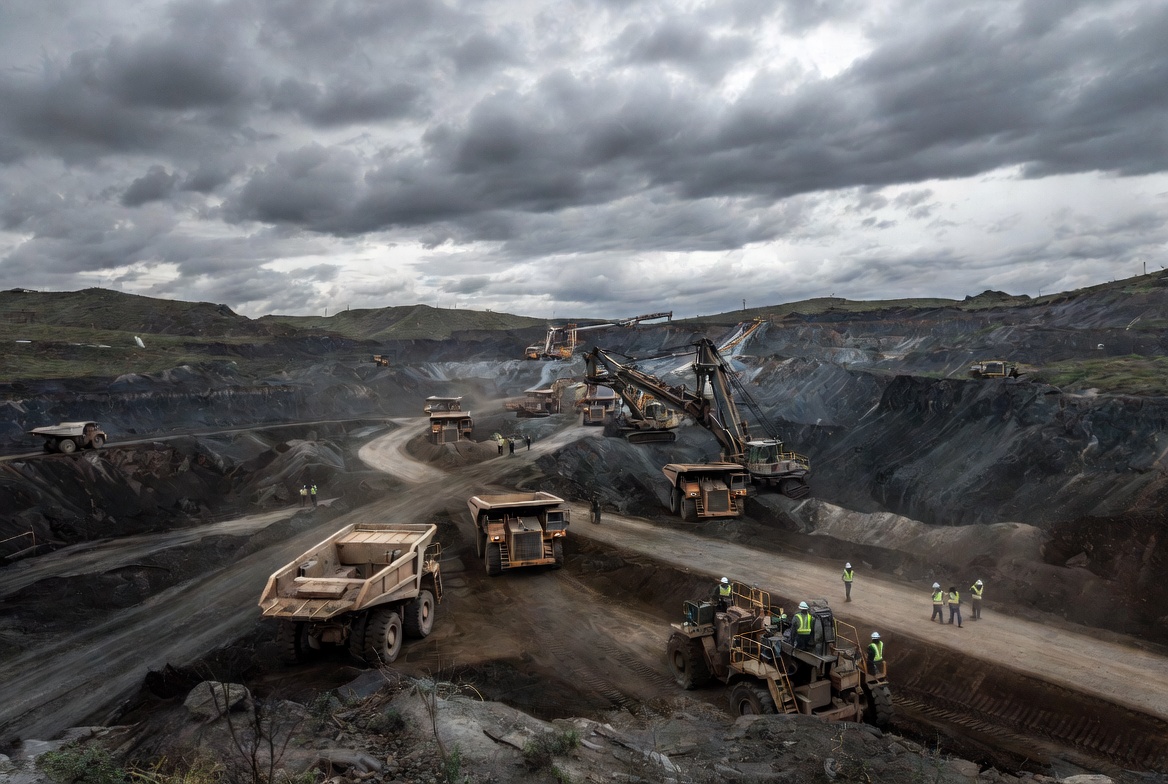
Peru produces more copper than any nation except Chile. It hosts world-class deposits, modern infrastructure, and a mining tradition spanning centuries. Yet this geological treasure sits atop a powder keg of social unrest, political volatility, and simmering indigenous opposition that threatens to derail the industry’s future.
For copper investors, Peru presents a paradox: unmatched geological potential paired with escalating operational risk. Las Bambas—one of the world’s largest copper mines—has spent nearly a decade battling road blockades that periodically halt production. Antamina, another Tier 1 asset, faces environmental opposition threatening its expansion plans. Meanwhile, a fragmented political landscape offers no clear path to resolution.
This is not a temporary disruption. It’s a structural crisis of social license—the fragile agreement between mining companies and host communities that determines whether projects operate or stagnate. Understanding Peru’s political risk landscape is essential for any copper investor evaluating exposure to South American mining assets.
Peru’s Copper Landscape: The Andean Mining Corridor
Peru sits at the heart of the Central Andean Copper Belt, a 2,000-kilometer geological formation stretching from Chile through Peru and into Ecuador. This belt contains approximately 40% of the world’s known copper reserves, concentrated in massive porphyry deposits formed by ancient volcanic activity.
Production Overview
| Metric | 2024 Data | Global Context |
|---|---|---|
| Annual Copper Production | ~2.6 million tonnes | #2 worldwide (10-11% of global supply) |
| Number of Operating Mines | 8 major copper operations | Plus 30+ smaller polymetallic mines |
| Concentrate Exports | ~2.2 million tonnes | Primary product form |
| Cathode Production | ~400,000 tonnes | SX-EW operations |
| Mining Contribution to GDP | ~10% | Excluding indirect effects |
| Mining Contribution to Exports | ~60% | Dominant export sector |
Sources: Ministerio de Energía y Minas (MINEM), SNMPE, Cochilco
The Andean mining corridor runs roughly parallel to Peru’s Pacific coast, with major operations clustered in three regions:
- Arequipa Region (south): Cerro Verde, the country’s largest copper mine
- Ancash Region (central): Antamina, the polymetallic giant
- Apurímac/Cusco Regions (south-central): Las Bambas, Quellaveco, and the most volatile social conflicts
Geographic Risk Concentration: Nearly 70% of Peru’s copper production originates from the southern Andes—precisely where community opposition is most organized, road infrastructure most vulnerable, and political authority most contested between Lima and regional governments.
Las Bambas: The Problem Child of Peruvian Mining
No single operation better illustrates Peru’s social license crisis than Las Bambas. This massive open-pit mine, operated by China’s MMG Limited (62.5% ownership), should be a crown jewel. Instead, it has become a cautionary tale of community conflict, production disruptions, and the limits of government mediation.
The Asset Fundamentals
Las Bambas is genuinely world-class:
| Specification | Detail |
|---|---|
| Design Capacity | 385,000–400,000 tonnes copper/year |
| Actual 2024 Production | ~280,000–300,000 tonnes (70-75% capacity) |
| Mine Life | 20+ years at current reserves |
| Grade | 0.60–0.70% Cu |
| Workforce | ~5,000 direct employees; 20,000+ indirect |
| Infrastructure Investment | $10+ billion (including construction) |
| Ownership | MMG (62.5%), Guoxin International (22.5%), CITIC Metal (15%) |
Source: MMG Limited Annual Reports, 2024 Operational Updates
The Road Blockade Crisis: A Chronology of Conflict
Las Bambas has no direct rail connection. All copper concentrate—over 300 truckloads daily—travels via the Corredor Vial Apurímac-Cusco-Arequipa, a narrow mountain highway passing through communities that claim they receive inadequate benefits from the mine.
Key Disruption Events:
| Period | Duration | Impact | Trigger |
|---|---|---|---|
| 2015 (Construction) | 3+ months | $500M+ cost overruns | Initial land disputes |
| 2016–2017 | Intermittent | Production delays | Fuerabamba community resettlement |
| 2019 | 2 months | Force majeure declared | Challhuahuacho community blockade |
| 2020 | 3 weeks | Reduced operations | COVID-19 + labor disputes |
| 2021 | 4+ months | ~180,000 tonnes lost | Huancuire community land claims |
| 2022 | 2+ months | ~100,000 tonnes lost | Road access disputes |
| 2023 | 3+ months | Force majeure | Chumbivilcas province protests |
| 2024 | Ongoing intermittent | Operating at 60-75% capacity | Renewed Fuerabamba/Chumbivilcas claims |
Sources: MMG disclosures, Peruvian press, MINEM reports
The 2024 disruptions were particularly damaging. MMG reported Q3 2024 production down 35% year-over-year due to blockades. Full-year 2024 output of approximately 280,000–300,000 tonnes represented roughly 75% of design capacity—a devastating underperformance for a mine that should be generating massive cash flows at current copper prices.
Root Causes: Why Las Bambas Can’t Escape Conflict
The Resettlement Legacy: Las Bambas displaced the Fuerabamba community during construction. While MMG built a new town and compensation programs, grievances persist over land valuation, employment promises, and environmental concerns. These unresolved issues resurface during every negotiation cycle.
The Transportation Bottleneck: Unlike Cerro Verde (near Arequipa city) or Antamina (with dedicated infrastructure), Las Bambas depends on a public road passing through multiple jurisdictions. Each community along the route—Fuerabamba, Huancuire, Chumbivilcas—can independently blockade the entire operation.
Chinese Ownership Complications: MMG’s Chinese state-linked ownership creates unique tensions. Local communities often perceive Chinese operators as less responsive to social demands than Western multinationals. Government relations, while officially cordial, lack the informal channels that facilitate dispute resolution with traditional mining powers.
What’s Next for Las Bambas?
The outlook remains troubled. MMG has announced infrastructure diversification studies, including a potential slurry pipeline, but implementation would require years and billions in additional capital. Meanwhile, community negotiations follow a familiar pattern: blockade, government mediation, temporary agreement, broken promises, renewed blockade.
For investors, Las Bambas demonstrates that even Tier 1 geology cannot overcome broken social license. The mine’s NPV calculations must incorporate ongoing production risk that equivalent Chilean or Australian assets simply don’t face.
Antamina: Operating on the Edge
While Las Bambas dominates headlines with blockades, Antamina faces a quieter but equally threatening crisis: environmental opposition to its expansion plans that could foreshorten mine life and production potential.
The Asset Profile
| Specification | Detail |
|---|---|
| 2024 Production | ~380,000–400,000 tonnes copper |
| Zinc Co-production | ~350,000 tonnes (world’s largest zinc mine) |
| Ownership | BHP (33.75%), Glencore (33.75%), Teck (22.5%), Mitsubishi (10%) |
| Location | Ancash Region, 4,300m elevation |
| Mine Type | Large-scale open pit polymetallic |
| Workforce | ~3,500 employees |
Sources: Company filings, Teck Resources reports
The Extension Project Crisis
Antamina’s current pit is approaching exhaustion. The Antamina Expansion Project targets the Reparaz and Atacocha deposits, which could extend operations 15+ years. But these deposits sit within watersheds feeding the Huascarán National Park and local agricultural communities.
The Opposition: Environmental groups and regional authorities have challenged Antamina’s environmental impact study (EIA), citing:
- Water contamination risks to the Santa River basin
- Impacts on high-altitude wetlands (bofedales)
- Glacial retreat acceleration
- Inadequate community consultation
In November 2024, Peru’s environmental oversight agency (OEFA) ordered additional studies, delaying expansion approvals into 2025–2026. This regulatory uncertainty creates a ticking clock: without extension approval, Antamina faces declining grades and eventual closure within this decade.
Production at Risk?
Even without expansion, Antamina can maintain current production through 2028–2030. But beyond that horizon, the mine faces a cliff edge without new ore sources. The BHP-Glencore-Teck consortium has invested billions in Peruvian operations and will fight aggressively for approvals—but the political environment is increasingly hostile to major mining expansions.
Other At-Risk Operations: The Risk Spectrum
Peru’s copper industry spans a spectrum of political risk exposure. While Las Bambas represents the extreme end, other operations face varying degrees of social and regulatory pressure.
Major Copper Operations Risk Assessment
| Mine | Owner | 2024 Production | Risk Level | Key Risk Factors |
|---|---|---|---|---|
| Cerro Verde | Freeport-McMoRan (53.6%) | ~450,000 t | LOW | Established community programs; water recycling investments; Arequipa proximity |
| Las Bambas | MMG (62.5%) | ~280,000 t | CRITICAL | Road blockades; resettlement grievances; multiple community disputes |
| Antamina | BHP/Glencore/Teck | ~390,000 t | HIGH | Extension project delays; environmental opposition; EIA uncertainty |
| Quellaveco | Anglo American (60%), Mitsubishi (40%) | ~280,000 t | MODERATE | Newer operation (2022 startup); ongoing water/community negotiations |
| Toromocho | Chinalco (100%) | ~180,000 t | MODERATE-HIGH | Expansion project; historical community tensions; Chinese operator perception |
| Constancia | Hudbay Minerals | ~100,000 t | MODERATE | Remote location; fewer community pressures but logistics challenges |
Production estimates based on company reports and industry estimates
Operation Profiles
Cerro Verde: The Exception That Proves the Rule
Cerro Verde demonstrates that Peruvian mining can achieve stable operations. Freeport-McMoRan’s approach—massive investment in water treatment infrastructure, direct employment for local communities, and decades of operational presence—has created relative stability. The mine’s proximity to Arequipa city (Peru’s second-largest) provides economic integration that remote operations lack.
Quellaveco: Can Newer Mines Avoid Las Bambas’ Fate?
Anglo American’s Quellaveco, which reached commercial production in 2022, represents a test case for modern Peruvian mining. The company invested heavily in community engagement before construction and maintains an independent grievance mechanism. However, 2024 saw emerging tensions over water allocation with agricultural communities. Whether Quellaveco can maintain social license long-term remains uncertain.
Toromocho: The Chinese Operator Challenge
Chinalco’s Toromocho expansion aims to boost production to 300,000+ tonnes annually. But like Las Bambas, Chinese ownership creates perception challenges, and historical community relations at the original operation (acquired from Peruvians in 2007) were strained. The expansion timeline has already slipped due to permitting delays.
The Political Dimension: Lima vs. The Regions
Peru’s copper crisis cannot be separated from its political dysfunction. The country has had six presidents since 2016, with the current administration of Dina Boluarte clinging to power amid low approval ratings and ongoing protests.
President Boluarte’s Mining Stance
The Boluarte administration officially supports mining investment—Peru’s economy depends on it. But this support manifests as crisis management rather than proactive policy:
- Deployment of military/police to clear road blockades (politically costly)
- Emergency decrees allowing dialogue with communities (limited effectiveness)
- Passive approach to environmental permitting reform
- Weak regional coordination with governors who often side with protesters
The government’s inability to prevent blockades—or provide credible enforcement when agreements are broken—encourages communities to escalate tactics. Why negotiate when blocking the road gets immediate government attention?
Regional vs. Central Government Tensions
Peru’s 25 regional governors often align with local protesters against Lima-based mining companies. This dynamic creates a governance gap: the central government grants mining concessions, but regional authorities control roads, environmental enforcement, and social program coordination.
In Apurímac Region (Las Bambas), Governor Baltazar Lantarón has publicly supported community protesters while demanding more mining revenue transfers. This contradictory position—simultaneously opposing and demanding benefits from mining—reflects the impossible political calculus facing regional politicians.
Indigenous Rights and Consulta Previa
Peru’s Consulta Previa (prior consultation) law requires government consultation with indigenous communities before projects affecting their territories. Implementation has been inconsistent:
- Timing disputes: Consultation often occurs after significant investment
- Scope disagreements: Communities demand veto power; government offers consultation only
- Compensation expectations: Consultation outcomes frequently include demands exceeding legal requirements
The Inter-American Court of Human Rights has ruled that Peru must obtain indigenous consent—not merely consult—for major projects. This evolving legal standard creates uncertainty for existing operations and impossible barriers for new projects.
Social License Crisis: The Core Problem
Social license to operate refers to the ongoing acceptance of mining activities by local communities and stakeholders. In Peru, this license is fraying—even for established operations.
What Broke the Social Contract?
The 2000s mining boom created expectations that rising copper prices would transform Andean communities. Reality fell short:
| Promise | Reality |
|---|---|
| High-paying mining jobs | Limited direct employment; most jobs go to specialized workers from outside |
| Regional infrastructure | Roads built for mine access, not community needs |
| Tax revenue transformation | Mining royalties captured by Lima; regions receive inadequate shares |
| Environmental protection | Water contamination incidents; dust; landscape destruction |
| Long-term prosperity | Commodity price volatility; boom-bust cycles |
Case Study: The Las Bambas Road
The Corredor Vial used by Las Bambas was upgraded for heavy mining trucks. Local communities expected improved access to markets, healthcare, and education. Instead, they got dust, accidents, and truck traffic overwhelming village roads—while the mine’s concentrate traveled to Pacific ports for export.
This perceived asymmetry—burdens borne locally, benefits exported globally—fuels resentment that manifests in blockades and protests.
Compensation Disputes: The Asymmetric Relationship
Mining companies negotiate community agreements with limited government oversight. When companies fail to deliver promised projects—or when community expectations exceed contract terms—disputes escalate quickly.
The 2021 Las Bambas crisis exemplifies this: Fuerabamba community members claimed MMG had not fulfilled employment quotas and infrastructure commitments from the original resettlement agreement. MMG argued it had met contractual obligations. Without credible third-party arbitration, the dispute became a months-long production shutdown.
Peru vs. Chile: The Risk Comparison
No comparison is more important for copper investors than Peru versus Chile. These South American neighbors dominate global supply but present starkly different risk profiles.
Side-by-Side Risk Comparison
| Risk Factor | Chile | Peru |
|---|---|---|
| Political Stability | Stable democracy; regular transitions | Chronic instability; 6 presidents since 2016 |
| Social License | Generally established; union-based disputes | Community-based conflicts; blockades common |
| Regulatory Framework | Clear; predictable (though high tax burden) | Unclear; permitting delays; inconsistent enforcement |
| Indigenous Rights | Consultation required; generally manageable | Evolving legal standards; consent requirements emerging |
| Infrastructure | Modern; dedicated mine infrastructure | Often shared/public roads; vulnerable to blockades |
| Labor Relations | Strong unions; periodic strikes | Weaker unions; community conflicts dominant |
| Resource Nationalism | High taxes (47% royalty above $4/lb) | Lower taxes; but operational disruptions erode returns |
| Security of Tenure | Strong property rights | Erosion of concessions possible; community occupations |
| Investment Attractiveness | Declining due to taxes; still investable | High geological appeal; high operational risk |
Which Jurisdiction is Riskier?
For Operational Risk: Peru is clearly riskier. Chilean mines face labor strikes and tax debates, but they generally operate without production-halting community blockades. Las Bambas-style disruptions are virtually unknown in Chile.
For Fiscal Risk: Chile is riskier. The 47% royalty on copper above $4/lb significantly erodes project economics. Peru’s tax burden is lower, though operational disruptions often cost more than higher taxes would.
For Investment Timing: Peru may offer better value for risk-tolerant investors. Chilean assets are fully priced; Peruvian assets trade at discounts reflecting operational fears. A resolution of Peru’s social license crisis would trigger significant re-ratings.
Portfolio Implication: Diversified copper exposure should include both jurisdictions, with position sizing reflecting risk tolerance. Conservative investors overweight Chile; contrarian investors may find value in beaten-down Peruvian assets.
Investment Implications: Navigating the Crisis
Peru’s political risk crisis creates both dangers and opportunities for copper investors. Understanding the landscape is essential for positioning.
Should Investors Avoid Peru Exposure?
Not necessarily—but position size appropriately.
For conservative portfolios: Limit Peruvian exposure to established operators with proven community relations (primarily Cerro Verde/Freeport). Avoid pure-play Peruvian miners or operators with chronic conflict histories.
For diversified mining exposure: Major multinationals (BHP, Glencore, Anglo American) have Peruvian assets that represent modest portfolio shares. Their global diversification mitigates Peru-specific risks.
For speculative/contrarian investors: Peruvian mining equities trade at significant discounts to NAV. A resolution of social license issues—or a copper price spike that makes even disrupted operations highly profitable—could generate outsized returns.
Valuation Discounts: Opportunity or Warning?
| Company/Asset | Approximate Peru Discount | Rationale |
|---|---|---|
| MMG Limited | 30-40% vs. copper peers | Las Bambas operational risk |
| Peruvian Mining ETF | 25-35% vs. global miners | Country risk premium |
| Antamina (private JV) | Not directly traded | Valuation disputes among partners |
| Cerro Verde (via Freeport) | Minimal discount | Relative stability |
These discounts reflect rational risk assessment, not market inefficiency. They will persist until Peru demonstrates sustained operational stability.
Distressed Asset Opportunities
Peru’s crisis may create acquisition opportunities:
- MMG’s Las Bambas stake: If Chinese owners tire of conflict, Western operators with community expertise might acquire at distressed prices
- Junior project developers: Peruvian exploration companies trade at fractions of NAV; Tier 1 discoveries exist but lack development capital due to permitting paralysis
- Royalty/streaming structures: Financiers providing non-operating capital to Peruvian mines demand higher returns, creating yield opportunities
Conclusion & Outlook
Peru’s copper mining sector faces a structural social license crisis that will not resolve quickly. The combination of indigenous rights evolution, regional political fragmentation, and broken community trust creates a persistent headwind for even the best-managed operations.
The Base Case Outlook (2026–2030)
- Las Bambas continues operating at 70-85% capacity with periodic disruptions
- Antamina secures expansion approvals eventually, but delays compress mine life
- Quellaveco faces emerging community tensions as honeymoon period ends
- Cerro Verde remains the relative safe harbor
- New project development remains effectively frozen due to permitting paralysis
Peruvian copper production likely stagnates or declines slightly through 2030—precisely when global supply needs growth.
The Bull Case: Resolution Scenario
If the Boluarte government—or a successor administration—implements credible social license reforms:
- Binding community arbitration mechanisms
- Regional revenue-sharing improvements
- Streamlined but rigorous environmental permitting
Then Peruvian assets could re-rate dramatically. The geology remains world-class; the only constraint is political.
Investment Bottom Line
Peru is not uninvestable—it requires sophisticated risk assessment. Investors must:
- Differentiate by operator quality: Freeport’s Cerro Verde is not MMG’s Las Bambas
- Size positions appropriately: Limit Peru to risk-tolerant portfolio allocations
- Monitor community indicators: Track blockade patterns, negotiation outcomes, and regional political developments
- Demand risk premiums: Peruvian assets should trade cheaper; ensure you’re compensated for risk
The copper supercycle thesis depends partly on supply constraints—and Peru’s political dysfunction is a significant contributor to those constraints. For investors who correctly navigate the risk landscape, Peruvian copper offers both yield and optionality on social license improvements that could unlock massive value.
The question is not whether Peru’s copper mines will produce. It’s whether they can produce reliably enough to justify investment at prices reflecting anything less than maximum pessimism.
Disclaimer: This analysis is for informational purposes only. Mining investments carry significant risks including commodity price volatility, operational disruptions, and political changes. Past performance does not guarantee future results. Consult qualified financial advisors before making investment decisions.
Last updated: March 2026 | Data sources: Company filings, MINEM, SNMPE, MMG Limited reports, BHP/Glencore/Teck disclosures, industry analyst reports.