Top 10 Largest Copper Mines in the World (2026 Rankings)
The Heavy Hitters of Copper Production
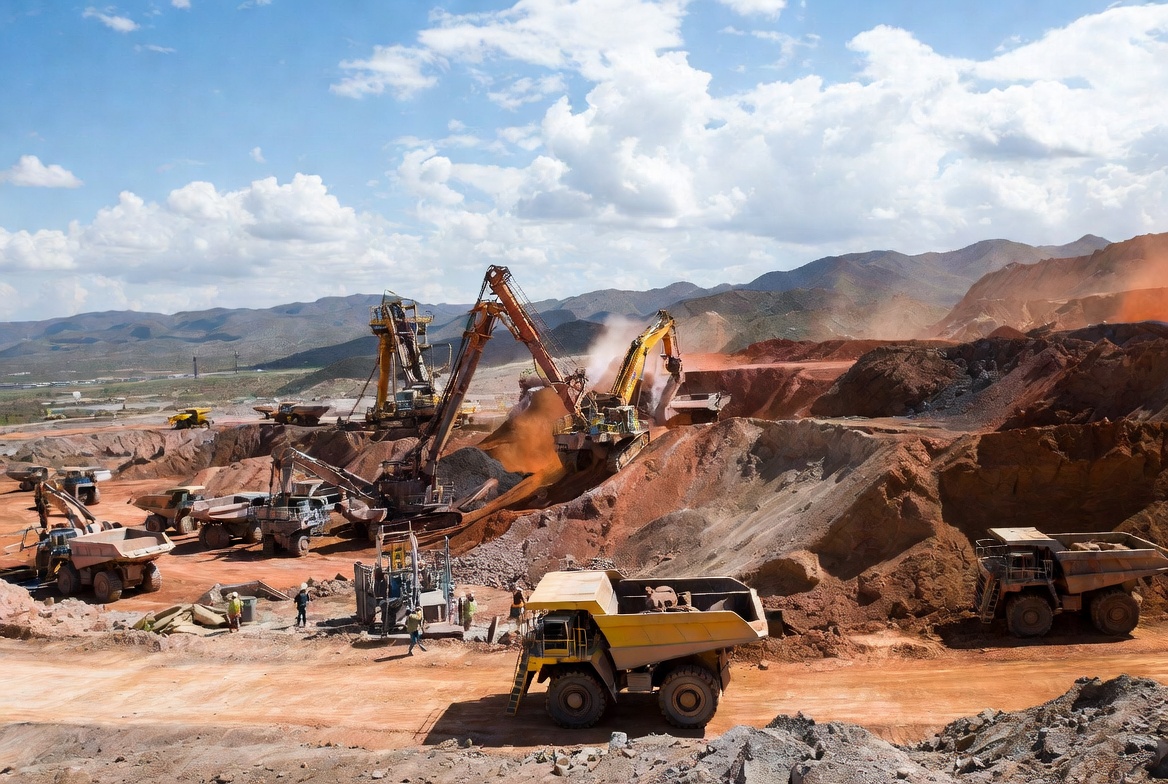
Copper doesn’t come from nowhere. While traders watch the London Metal Exchange and investors track inventory levels at the Shanghai Futures Exchange, the real action happens thousands of feet underground—or in massive open pits scattered across Chile’s Atacama Desert, the Peruvian Andes, and the mountains of Mongolia.
Understanding where copper comes from isn’t mining trivia—it’s essential due diligence. The top 10 mines account for roughly 30% of global copper production, making them critical supply chain chokepoints. When Escondida has labor issues or Las Bambas faces protests, the copper price moves.
This ranking uses the most recent available production data (primarily 2024 figures, with some 2025 estimates where confirmed). We’ve verified production numbers through company annual reports, quarterly operational updates, and regulatory filings. Bookmark this page—it’s your definitive reference for the world’s copper heavyweights.
Quick Reference Table: Top 10 Copper Mines
| Rank | Mine | Country | Owner(s) | 2024 Production (kt) | Grade | Type |
|---|---|---|---|---|---|---|
| 1 | Escondida | Chile | BHP (57.5%), Rio Tinto (30%), JECO (12.5%) | ~1,050 | 0.60-0.65% Cu | Open pit |
| 2 | Collahuasi | Chile | Glencore (44%), Anglo American (44%), JCR (12%) | ~600 | 0.80-0.90% Cu | Open pit |
| 3 | El Teniente | Chile | Codelco (100%) | ~470 | 0.85-0.95% Cu | Underground |
| 4 | Cerro Verde | Peru | Freeport-McMoRan (53.56%), SMM Cerro Verde (21%), Compañia de Minas Buenaventura (19.58%) | ~455 | 0.35-0.40% Cu | Open pit |
| 5 | Morenci | USA | Freeport-McMoRan (72%), SMM Morenci (28%) | ~400 | 0.25-0.30% Cu | Open pit |
| 6 | Antamina | Peru | BHP (33.75%), Glencore (33.75%), Teck (22.5%), Mitsubishi (10%) | ~390 | 0.95-1.05% Cu | Open pit |
| 7 | Los Bronces | Chile | Anglo American (50.1%), Mitsui (22.4%), Codelco (20.5%), Mitsubishi (7%) | ~320 | 0.60-0.70% Cu | Open pit |
| 8 | Las Bambas | Peru | MMG (62.5%), Guoxin International (22.5%), CITIC Metal (15%) | ~300 | 0.60-0.70% Cu | Open pit |
| 9 | Chuquicamata | Chile | Codelco (100%) | ~270 | 0.70-0.80% Cu | Underground transition |
| 10 | Oyu Tolgoi | Mongolia | Rio Tinto (66%), Government of Mongolia (34%) | ~210 | 1.40-1.60% Cu | Underground |
Note: Production figures in copper contained metal (not ore tonnage). Grades vary by ore body and reporting methodology.
Detailed Profiles: The Top 5
#1 Escondida (Chile) — The Undisputed King
Escondida isn’t just the world’s largest copper mine—it’s in a league of its own. Located in Chile’s Atacama Desert, this BHP-operated behemoth has held the top spot for over three decades and shows no signs of relinquishing it.
The Numbers:
- 2024 Production: ~1,050 kt copper contained
- Mine Life: 30+ years remaining
- Workforce: ~6,000 direct employees
- Processing: Three concentrators plus two SX-EW plants
Operational Overview: Escondida is a massive porphyry copper deposit discovered in 1981. Commercial production began in 1990, and the mine has produced over 20 million tonnes of copper. The operation consists of two main open pits plus concentrator and SX-EW facilities.
The Grade Challenge: Escondida faces the same problem plaguing the entire industry: declining grades. Feed grades have dropped from over 1.5% Cu in the early 2000s to around 0.60-0.65% today. BHP is responding with the Escondida Water Supply project (desalination expansion) and ongoing pit optimization. The $4+ billion investment in desalination ensures water security—critical in the water-starved Atacama.
Investment Angle: BHP derives roughly 25% of its copper revenue from Escondida alone. Any disruption here moves the company’s stock price and the global copper market.
#2 Collahuasi (Chile) — High Altitude, High Output
At 4,400 meters above sea level in the Andes, Collahuasi operates in one of the world’s most challenging mining environments. The altitude affects everything—from equipment performance to worker acclimatization. Yet this joint venture between Glencore and Anglo American consistently delivers.
The Numbers:
- 2024 Production: ~600 kt copper contained
- Elevation: 4,400m (14,400 ft)
- Processing Capacity: 210,000 tonnes per day
- Mine Type: Large-scale open pit
Operational Overview: Collahuasi has operated since 1999, with the Rosario and Ujina deposits forming the backbone of production. Despite extreme altitude, the mine maintains relatively high grades around 0.80-0.90% Cu.
Recent Investments: Both Glencore and Anglo American have committed significant capital to maintain production levels. The Ujina pit expansion and concentrator optimization projects aim to offset natural grade decline. In 2024, the mine commissioned additional molybdenum recovery circuits, diversifying revenue streams.
Investment Angle: Collahuasi represents a “Tier 1” asset for both Glencore and Anglo American. For Glencore, it’s a cornerstone copper operation; for Anglo, it’s the second-largest contributor to copper volumes after Los Bronces.
#3 El Teniente (Chile) — The Underground Giant
El Teniente is the world’s largest underground copper mine and one of the deepest. Owned 100% by Chile’s state-owned Codelco, this historic operation has been running for over 100 years—a testament to the massive scale of the ore body.
The Numbers:
- 2024 Production: ~470 kt copper contained
- Depth: Operations extend below 2,300 meters
- History: Continuous operation since 1905
- Workforce: ~8,000 employees
Operational Overview: El Teniente uses block caving—a mining method where rock is undercut, allowing gravity to fracture and extract ore. The mine has over 4,500 kilometers of underground tunnels—more than the Chilean highway system.
The New Mine Level Project: Codelco is investing $5+ billion in the New Mine Level (NML) project, which will extend operations below the current working levels. This massive infrastructure project includes new shafts, crushers, and conveyors. Delays and cost overruns have plagued NML, but successful completion secures production through 2060+.
Investment Angle: As a Codelco operation, El Teniente isn’t directly investable. However, Codelco’s production trends affect Chilean government finances and copper market sentiment. Watch NML progress—it signals the future of Chilean state copper.
#4 Cerro Verde (Peru) — Peru’s Copper Crown Jewel
Cerro Verde is not only Peru’s largest copper mine but also one of the world’s largest concentrator operations. Located near Arequipa, this Freeport-McMoRan-operated asset underwent a massive $4.6 billion expansion completed in 2016 that doubled its production capacity.
The Numbers:
- 2024 Production: ~455 kt copper contained
- Processing Capacity: 409,000 tonnes per day (one of world’s largest)
- Expansion Completion: 2016
- Co-products: Significant molybdenum production
Operational Overview: Cerro Verde is a porphyry copper deposit with relatively low grades (0.35-0.40% Cu) but massive tonnage. The 2016 expansion brought total processing capacity to over 400,000 tonnes per day. The mine also produces substantial molybdenum credits.
Water and Community: Located in a water-stressed region, Cerro Verde operates a large tailings desalination facility. The mine has invested heavily in community relations, including wastewater treatment for nearby Arequipa—a model for mining-community partnerships.
Investment Angle: Cerro Verde is Freeport-McMoRan’s second-largest operation after Morenci. For investors seeking exposure to Peruvian copper with relatively stable community relations (compared to Las Bambas or Quellaveco challenges), Cerro Verde represents the gold standard.
#5 Morenci (USA) — America’s Copper Fortress
Morenci is the largest copper mine in the United States and the only American operation in the global top 10. Located in eastern Arizona’s Clifton-Morenci district, this massive open-pit complex represents the backbone of US copper production.
The Numbers:
- 2024 Production: ~400 kt copper contained
- Reserves: 40+ years at current rates
- Ownership: Freeport-McMoRan (72%), Sumitomo Metal Mining (28%)
- Processing: Concentrator + SX-EW facilities
Operational Overview: Morenci has operated continuously for over 140 years. The current operation spans multiple pits, concentrators, and leaching/SX-EW facilities. Despite extremely low grades, economies of scale make Morenci highly profitable at elevated copper prices.
Expansion Potential: Freeport continues to invest in Morenci, with ongoing pit expansion and concentrator optimization. The 2024 completion of the Morenci Restarts project added incremental production. The mine has significant in-situ leaching potential that could extend life further.
Investment Angle: For investors concerned about jurisdictional risk (Chilean nationalization threats, Peruvian social unrest), Morenci offers Tier 1 copper exposure in the United States. It’s a cornerstone of Freeport-McMoRan’s portfolio and essential for North American copper supply.
Mines #6-10: The Supporting Cast
While the top five grab headlines, mines #6-10 add another ~1.9 million tonnes of annual copper production.
#6 Antamina (Peru)
A polymetallic giant owned by BHP/Glencore (33.75% each), Teck (22.5%), and Mitsubishi (10%). 2024 production: ~390 kt copper. The mine faced temporary disruptions in late 2024 due to community road blockades.
#7 Los Bronces (Chile)
Anglo American’s flagship operation at 3,500m elevation. 2024 production: ~320 kt copper. Water challenges have affected grades processed. The Los Bronces Integrated Project aims to unlock new ore zones.
#8 Las Bambas (Peru)
Owned by China’s MMG (62.5%). 2024 production: ~300 kt copper. Infamous for community relations challenges and periodic road blockades—material political risk.
#9 Chuquicamata (Chile)
Once the world’s largest open-pit, “Chuqui” has transitioned underground. 2024 production: ~270 kt copper. Significant investment required as the underground ramp-up continues.
#10 Oyu Tolgoi (Mongolia)
The newest top-10 entry. 2024 production: ~210 kt copper from new underground operations. Rio Tinto’s $7+ billion underground expansion could reach 500+ kt/year by 2028-2030. The high-grade ore (1.4-1.6% Cu) makes this one of the world’s most valuable copper projects.
Key Insights: What the Data Tells Us
Geographic Concentration Risk
Six of the top 10 mines are in Chile. This concentration creates systemic risk. Chilean government policy changes—royalty increases, nationalization threats, or permitting delays—affect 60% of the world’s top copper mines. The proposed “mining royalty” reforms in Chile directly threaten the economics of these assets.
Three mines are in Peru. Peru represents another concentration risk, with Antamina, Cerro Verde, and Las Bambas all facing periodic social unrest. The 2022-2024 period saw multiple production stoppages at Las Bambas due to community protests.
Jurisdictional Diversification is Limited
Only one mine (Morenci) operates in the United States. For investors seeking developed-market copper exposure, options are extremely limited. The US has stringent permitting, environmental regulations, and limited untapped copper resources—making Morenci even more valuable.
Mongolia’s Oyu Tolgoi represents frontier market exposure. The geology is world-class, but the Mongolian government owns 34% and periodically challenges Rio Tinto on cost overruns.
Underground is the Future
Notice the trend: El Teniente (#3), Chuquicamata (#9), and Oyu Tolgoi (#10) are all underground or transitioning. The world’s easy-to-mine, high-grade open-pit deposits are depleting. Future copper supply requires deep, capital-intensive underground operations—raising costs and extending development timelines.
Investment Angle: Stock Exposure to Tier 1 Assets
Pure-Play Copper Giants
| Company | Top Tier Assets | % Revenue | Investment Thesis |
|---|---|---|---|
| Freeport-McMoRan (FCX) | Morenci, Cerro Verde, Grasberg | ~80% | Largest listed copper producer; Tier 1 US/Indonesia/Peru assets |
| BHP (BHP) | Escondida, Olympic Dam, Spence | ~25% | Diversified but Escondida anchors copper division |
| Rio Tinto (RIO) | Oyu Tolgoi, Escondida stake | ~15% | Oyu Tolgoi growth potential; Escondida cash flow |
| Glencore (GLEN) | Collahuasi, Antamina, Katanga | ~30% | Trading house + mining; high political risk exposure |
| Anglo American (AAL) | Collahuasi, Los Bronces, Quellaveco | ~25% | Restructuring to focus on copper; premium assets |
Key Risks to Monitor
-
Chilean Nationalization Risk: The “mining royalty” debate continues. A punitive tax regime could reduce investment in Escondida, Collahuasi, and El Teniente.
-
Peruvian Social Unrest: Las Bambas and Antamina face ongoing community relations challenges. Production stoppages create supply disruptions and price spikes.
-
Oyu Tolgoi Ramp-Up: Rio Tinto’s underground expansion must deliver. Delays would remove a critical growth pillar from the copper supply pipeline.
-
Water Constraints: Chilean mines (Escondida, Los Bronces) face acute water shortages. Desalination investments are essential but capital-intensive.
Interactive Mine Map
Want to see where these mines actually are? Explore our interactive visualization:
View Interactive Copper Mine Map →
Our map shows location, ownership, and production data for all ten mines plus 50+ other significant operations.
Conclusion: Why This Ranking Matters
The top 10 copper mines are the pillars of global supply. When these operations sneeze, the copper market catches a cold. For investors, understanding these assets is essential for:
- Assessing company quality: Does your copper stock own Tier 1 assets, or marginal operations?
- Jurisdictional risk: Are you overexposed to Chile? To Peru?
- Supply forecasting: Grade declines, expansion projects, and disruptions at these 10 mines determine global supply growth.
Bookmark this page. We’ll update production figures quarterly. In a market where supply disruptions move prices 10% in days, knowing your mines is as important as watching the LME.
Last updated: March 2026 | Production data sourced from company annual reports, quarterly operational reviews, and regulatory filings. Grades are indicative and vary by ore body and reporting period.